Search Engine Basics- Search engines handle billions of user searches every day. These searches are one of the largest sources of client traffic for multiple businesses. To ensure every user finds the right services for their search, search engines crawl, index, and rank these websites before presenting them in search results. If any step fails, the page may not get visibility.
Knowing how these processes work enables businesses to improve their performance in web search. Businesses seeking organic rankings should optimize their content to improve these factors. To help you strategize better, this guide is all you need. Let’s understand how to SEO optimize your websites for better crawling, indexing, and rankings.
What Is a Search Engine?
Before understanding the process, you must be clear about search engines. A search engine is a digital database. It comprises Google, Bing, and other platforms.
These search engines:
-
Scan the internet
-
Store information
-
Show the best results for users according to their search intent.
What Is Crawling in Search Engines?
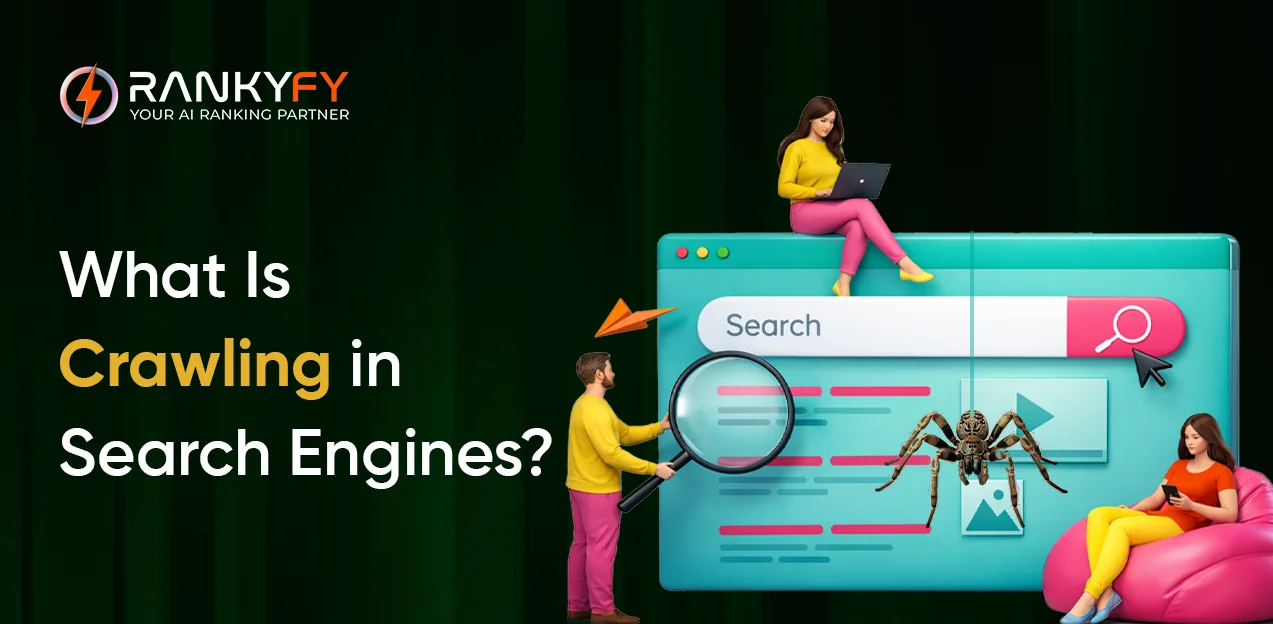
When users search online, search engines provide them with the most helpful answer. To do that, search engines follow a process. That process starts with crawling. Search engines use automated programs to read your site. These are called crawlers, bots, or spiders. These crawlers scan the internet and review multiple pages. The most valuable content gets the most visibility.
How Crawling Works
-
A crawler lands on a webpage
-
It reads the data
-
It follows any links to find new pages
The process is repeated multiple times to find new content.
Why Crawling Is Essential for Websites
If your website isn’t crawled, it remains invisible online.
Common issues for crawlers are:
-
Broken internal links
-
Pages blocked by robots.txt
-
Poor website structure
-
Slow page load speed
How to Optimize a Website for Better Crawling
To help search engines crawl easily:
-
Use clean and clear URLs
-
Create a logical internal linking structure
-
Submit an XML sitemap
-
Avoid unnecessary duplicate pages
What is Website Indexing?
Once a page is successfully crawled, it is indexed. Indexing is how search engines store and organize information.
What Is an Index?
An index is a giant database. When users search online, Google uses this database to show results.
An index holds:
-
Webpage content
-
Keywords
-
Page topics
-
Page quality signals
What Happens During Indexing
Search engines analyze:
-
Main topic of the page
-
Keywords and phrases
-
Content quality
-
User value
-
Duplicate content
Why Pages Don’t Get Indexed
Some pages never make it into the index. If your pages are not indexed, your SEO will not generate results for you.
Common reasons are:
-
Thin or copied content
-
Poor page structure
-
Technical errors
-
Noindex tags
-
Low trust or spam signals
Ensure your content is original and valuable, for search engines store it.
What are Rankings: How Search Engines Decide their Results
Ranking is what motivates brands to optimize their content and strategies. Rankings are the number of pages on which your website appears in your niche searches.
How Ranking Works
When a user types a search query, Google:
-
Reviews matching indexed pages
-
Scores them using hundreds of signals
-
Orders them from best to worst
The top results are the ones Google believes are most helpful. The results shown are ranked based on their quality and intent.
Key Factors To Boost Your Ranking
Search engines rank websites using multiple factors.
The most essential factors are:
Content Quality
Pages must clearly and fully answer the search.
Good content is:
-
Easy to read
-
Helpful
-
Accurate
-
Updated
Keyword Relevance
Your page should match what users are searching for.
That means:
-
Natural keyword use
-
Clear topic focus
-
Strong headings
User Experience
Google monitors how users behave.
Important signals include:
-
Page speed
-
Mobile friendliness
-
Time spent on the page
-
Bounce rate
Authority and Trust
Search engines trust sites that others trust.
Authority comes from:
-
Backlinks
-
Brand mentions
-
Consistent publishing
How Crawling, Indexing, and Ranking Work Together
Each step depends on the one before it.
-
Search engines crawl your site to find your pages.
-
The pages are then indexed to store the content.
-
After that, they rank the indexed pages to determine where to display them in search results.
If any step fails, the entire process stops.
SEO Errors That Reduce Website Visibility
Many websites struggle because of avoidable errors.
Some errors you can avoid include:
-
Publishing content without an SEO structure
-
Blocking important pages accidentally
-
Ignoring mobile optimization
-
Using duplicate content
-
Chasing keywords instead of intent
Fixing these simple errors can help your websites rank higher.
Conclusion
Crawling, indexing, and ranking are the backbone of how search engines work. When your website is easy for search engines to crawl, it is indexed more effectively. Easy indexing helps it to rank higher in search results. With optimization, it becomes easier for search engines to show your content to users. With RankyFy, you can ensure your websites are built to rank higher. RankyFy uses AI SEO tools and strategies to optimize your site and improve its visibility, clicks, and trust.

What to read next

What Is In-House SEO? A Complete Guide for Businesses
For businesses working in competitive industries, search engine visibility is essential for consistent lead and...
Read More
How to Improve SEO
Improving SEO is not just about adding primary keywords. It's about prioritizing user experience. Maintaining...
Read More
10 Things an SEO Site Audit Tool Should Check Before You Hit Publish
If you are publishing your website without running an SEO audit, you are missing out....
Read More
6 Technical SEO Audit Tools for Website Owners Who Aren’t Developers
A website that works well is a must for business owners and digital marketers to...
Read More