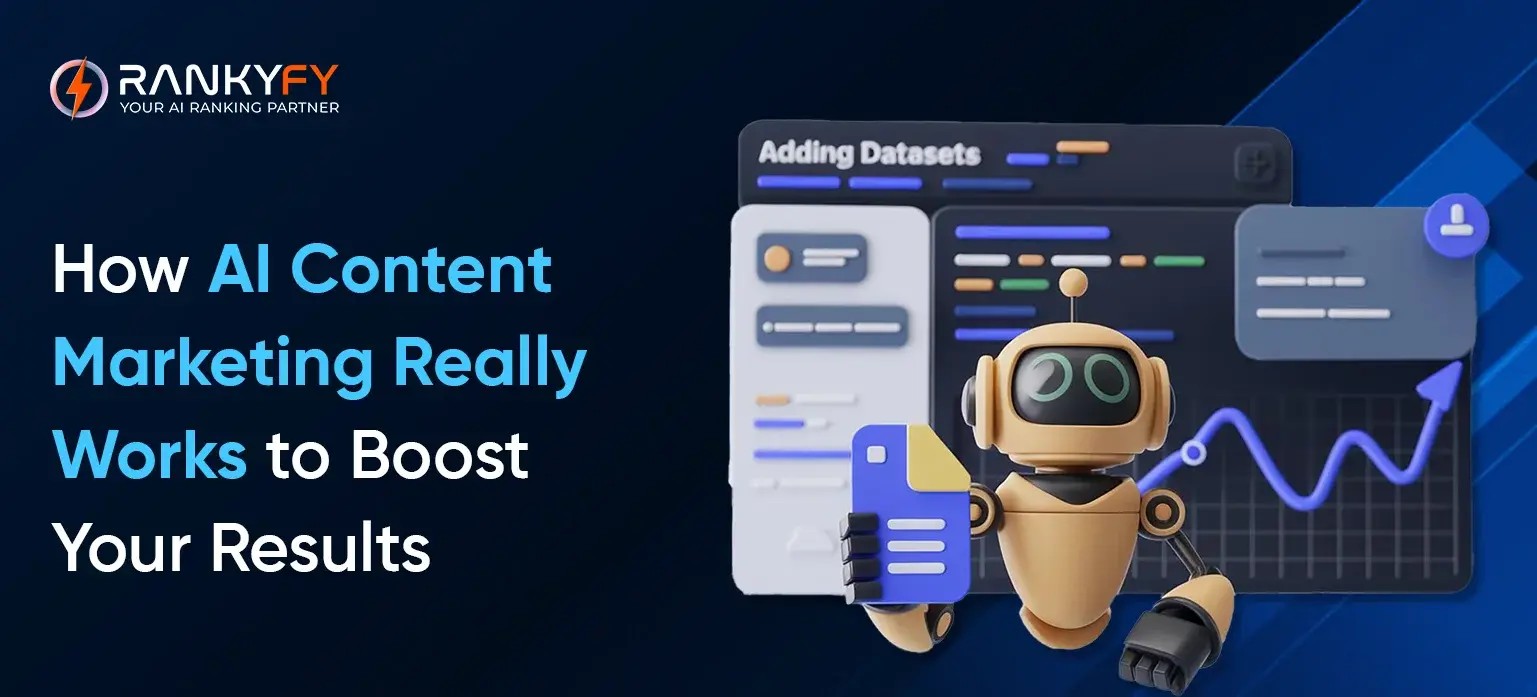
The concept of artificial intelligence (AI) is an extremely potent tool of contemporary marketing. Still, numerous brands do not comprehend what AI content marketing really does behind the scenes. It is not just about writing articles or social posts hastily. AI can enhance your entire content system (research, creation, personalization, distribution, and performance) by a significant margin when utilized in a strategic way.
In this blog, we provide an explanation of how AI content marketing actually works, how it does and does not work, and how you can use it to achieve big results.
What's Really Going On
AI content marketing uses software that knows how language functions to run work quickly. It browses research, prepares first drafts, provides edits, and does distribution work that previously consumed entire days. These tools dig through research, write rough drafts, suggest edits, and help with distribution tasks that used to consume entire days. A marketing individual can waste three hours researching competitors, industry news, search trend analysis, and identifying gaps to be addressed. It would take an AI platform approximately ten minutes to find what is really worth pursuing by searching through thousands of sources. AI content creation for marketing goes further. Modern platforms draft blog posts, write social updates, create email subject lines, and suggest improvements to published pieces. Having processed millions of examples, these systems recognize what tends to work, though they can't explain why something resonates emotionally or fits a specific brand moment.Putting Together Something Practical
An AI content marketing strategy starts with looking honestly at what's broken, not what sounds innovative. What causes the most frustration? Social content falling behind schedule? Are blog topics getting recycled because research takes too long? SEO optimization never happens because there's no bandwidth? Pick the bottleneck creating the biggest problems. Get one tool for that issue. Not three. Not five. Organizations often buy multiple AI platforms simultaneously, attempt massive transformation, overwhelm everyone with changes, and then abandon everything within months when adoption fails. A functional AI content marketing strategy works with existing systems rather than demanding wholesale changes. Teams managing content through established workflows need AI that fits into those processes, not platforms requiring everyone to learn completely different approaches. Look at content calendars. Instead of weekly meetings where people stare at empty slots wondering what to publish, AI tosses out topic suggestions based on search patterns, competitor activity, and past performance. Some platforms recommend posting schedules based on engagement data or generating multiple headline variations for testing.What Improves in Measurable Ways
The benefits of AI content marketing that matter show up in business metrics, not just operational efficiency. Maintaining competitive content output when budgets stay flat or hiring freezes kick in. Marketing teams multiply their effective capacity without adding headcount. Personalization works at scale. Someone who downloaded technical specifications three times needs different messaging than someone reading their first blog post. AI adjusts content based on behavior, matching messages to where prospects actually are in their research process. Conversion rates improve because relevance improves. Publishing consistency becomes realistic during busy periods. Content gaps damage search visibility and make companies look inactive or unstable. Most companies hit positive ROI within two quarters through increased output, better conversion, and reduced agency spending.Actually Starting Without Drama
How to get started with AI content marketing for small business is constantly asked. The answer involves smaller, more cautious steps than people expect. Pick the single biggest resource drain or output limiter. If managing five social channels burns half the week, start there. If SEO research never gets done, address that gap. Nearly every platform offers trial periods. Test thoroughly with real projects before spending money. Some tools look amazing in demos but add complexity that cancels efficiency gains in actual workflows. Current platforms target regular business users. Teams comfortable with standard marketing software usually get functional within days of hands-on practice. Quality improves with repeated use. Early outputs need substantial editing. After twenty or thirty iterations with sharper prompts and better platform understanding, quality jumps while editing time drops noticeably. Establish baselines before implementing anything. Choose KPIs connected to business goals: traffic, engagement, leads, and production time. Document current performance, track changes after adding AI. Some impacts appear within weeks. Others need quarters to fully develop. Concrete numbers prove whether the investment makes sense or not.Frequently Asked Questions
What is AI content marketing?
AI content marketing involves the application of AI tools to facilitate the process of creating, enhancing, and sharing content. The tools research, write first drafts, optimize content to search engines, and test the search engine results. The plan is still determined by human marketers, the brand voice is retained, and it is ensured that it aligns with the business.How does AI content marketing work?
AI platforms observe significant amounts of data regarding the content performance, audience activities, and market trends. They discover the opportunities that would be neglected by others, or that would require too much time to notice. Their data goes to the task of selecting topics, writing, making recommendations, anticipating outcomes, and automatically repetitive formatting and scheduling.What are the benefits of using AI in content marketing?
The key advantages are that much more content can be created with only a few extra staff involved, smarter decisions can be made through data analysis rather than guesswork, personalized messages can be sent to many people most cost-effectively, there can be a steady publishing schedule despite a limited number of resources, there is a reduction in production costs over time and a higher ranking of search results that can be achieved through systematic optimization.How can a beginner get started with AI content marketing?
Identify the biggest operational constraint limiting content quality or volume. Select one platform addressing that specific challenge—most offer free trials or entry tiers. Learn through hands-on use with actual projects rather than tutorials alone. Measure baseline performance, then track changes after implementation. Expand to additional tools only after demonstrating clear ROI on initial investment.What are the best AI tools for content marketing in 2026?
Optimal tools depend on specific business requirements and existing technology infrastructure. Widely adopted options include ChatGPT and Claude for versatile content generation, Jasper for marketing-focused copy, Surfer SEO for search optimization, Copy.ai for rapid content production, and comprehensive platforms like HubSpot or SEMrush offering integrated AI capabilities alongside other marketing functions.The Bottom Line
AI content marketing evolves constantly. New capabilities launch weekly. Every vendor claims revolutionary breakthroughs. Chasing every innovation creates distraction without performance improvement. Authenticity drives performance regardless of production methods. Generic AI content underperforms consistently. Content using AI for efficiency while maintaining a distinctive voice and real expertise drives engagement and conversion. This is where platforms like Rankyfy make a difference. Instead of generic AI output that sounds like every other company in the industry, Rankyfy combines AI speed with strategic optimization tailored to specific business goals. The platform handles the heavy lifting of research, drafting, and SEO optimization while ensuring content maintains the authentic voice and industry expertise that actually connects with audiences.What to read next

How to Create an Effective SEO Report in 2026 (+ Free Template)
SEO has changed a lot in the last few years, but one thing hasn’t: clients...
Read More
How Quickly AI Search Engines Pick Up New Content?
The manner in which search engines find and bring out information has had a dramatic...
Read More
Short vs. Long AI Content: Which is Actually Driving Results in 2026?
Search engines are evolving so quickly in 2026. AI affects the content side. The question...
Read More
SEO & User Experience: Simple Ways to Improve Rankings Fast
In the current competitive digital world, being ranked on Google is no longer a matter...
Read More