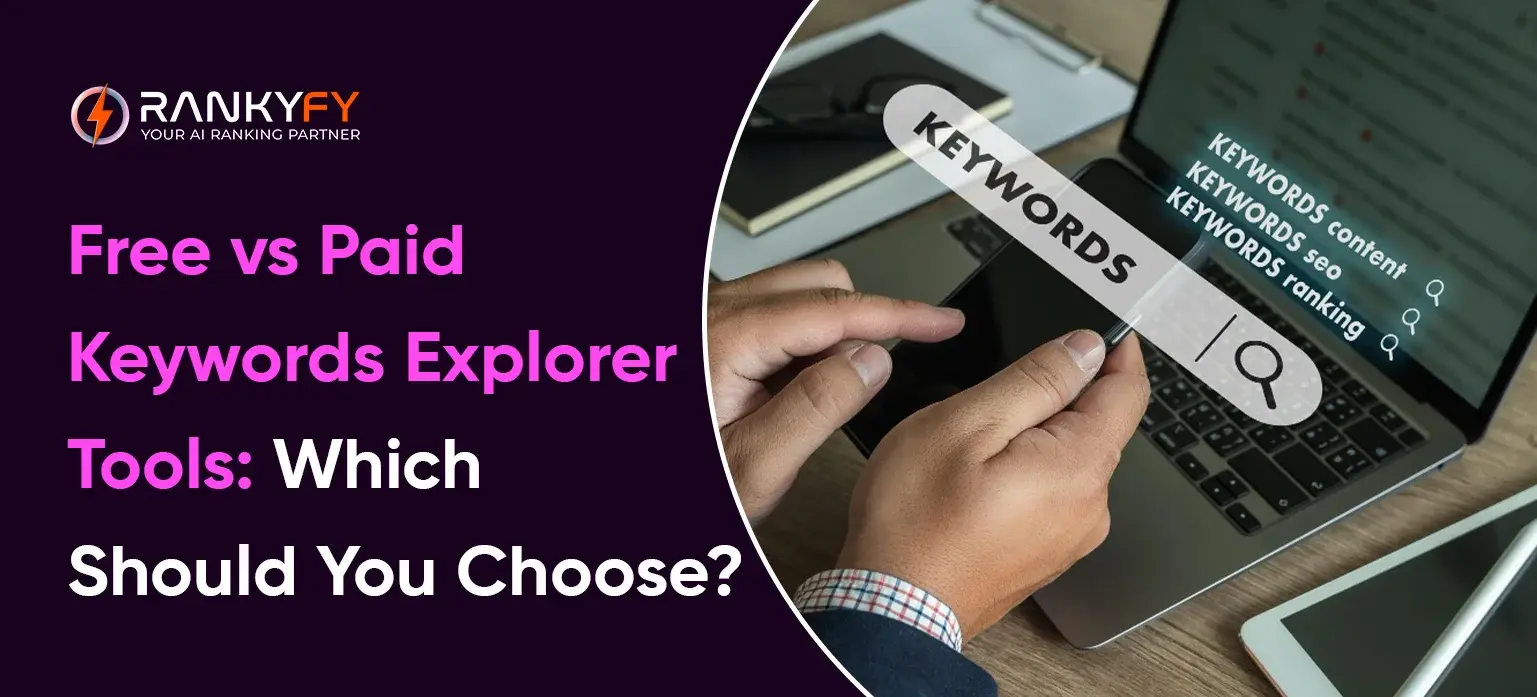
Picking the right free keyword explorer tool determines whether a website succeeds or fails on Google search results. Here's the real deal: marketers everywhere debate whether free tools cut it or if paid platforms justify their hefty price tags.
Free tools seem attractive because they're, well, free. But they come with annoying limitations. Paid platforms promise the moon with complete data access, yet those monthly bills add up fast. So what's the actual smart move here?
(This guide cuts through the marketing fluff and shows what works for different situations.)
What Are Keyword Explorer Tools?
Think of these tools as mind readers for Google searches. They show exactly what phrases people type when hunting for stuff online. Search volume tells how many people search monthly. Competition levels reveal how tough ranking will be. Difficulty scores predict success chances. Trend data shows if interest is climbing or tanking. Pretty straightforward stuff, but incredibly valuable for planning content.Types of Keyword Explorer Tools
- Free tools let anyone research keywords without opening their wallet. Catch? Daily search caps and stripped-down features. Google Keyword Planner, Ubersuggest's free version, and AnswerThePublic fit here.
- Paid tools blast through all restrictions and pile on advanced features. Ahrefs, SEMrush, and Moz want $99 to $400 monthly for the privilege.
Free Keyword Explorer Tools
Google Keyword Planner stays popular even though Google built it for advertisers. Ubersuggest Free dishes out solid suggestions until hitting the daily wall. AnswerThePublic creates cool visual maps of questions people ask.Pros of Free Tools
Zero dollars needed to start. No credit card dance, no "cancel before trial ends" reminder alarms. Just create an account and dig in. Small sites get plenty of mileage here. Coffee shops, local plumbers, hobby blogs and basic metrics work fine for these situations. The numbers guide content decisions well enough. Learning stays painless. Clean interfaces without twenty confusing sidebar menus keep things manageable for newbies.Cons of Free Tools
Daily limits wreck research flow. Right when finding good stuff, boom "You've reached your limit. Try again tomorrow." Super frustrating. Accuracy gets sketchy. Seeing "1,000-10,000 searches" instead of actual numbers makes planning harder. Competitor info? Basically non-existent. Forget exporting nice reports. Forget checking last year's trends. Forget filtering by anything useful. Sites hitting growth mode bump into these walls constantly.Paid Keyword Explorer Tools
SEO pros live inside Ahrefs, SEMrush, and Moz. These beasts combine keyword research with rank tracking, backlink checking, site health scans, and competitor stalking.Pros of Paid Tools
Exact numbers change the game completely. Knowing a keyword gets 8,300 monthly searches versus "5K-10K" makes prioritizing content way easier. Difficulty scores actually mean something. Competitor spying delivers gold. Check every keyword sending traffic to rivals. Spot weaknesses in their strategies. Find opportunities they're missing. This alone justifies the cost for many businesses. No limits anywhere. Research 500 keywords today? Go ahead. Export everything to spreadsheets? Sure. Access data from three years ago? The freedom feels amazing after using free tools.Cons of Paid Tools
That monthly bill hurts. Dropping $99 to $400 every month stings hard, especially when starting out or bootstrapping. Opting for annual plans saves money but means committing $1,200+ upfront. Too many features actually causes problems. New users face fifty metrics, thirty report types, and endless settings. Where to even start? The overwhelm is real. ROI takes months to materialize. Spending $1,200 yearly demands serious traffic increases to break even. That pressure builds.Key Differences Between Free and Paid Tools
| Feature | Free Tools | Paid Tools |
|---|---|---|
| Cost | $0 | $99-$400+/month |
| Search Numbers | Ballpark guesses | Exact counts |
| Daily Cap | 10-40 keywords | Unlimited |
| Competitor Intel | Almost nothing | Everything |
| Difficulty Scores | Missing often | Always included |
| Exports | Blocked or limited | Unlimited |
| Past Data | Nope | Years back |
When to Use Free Tools vs Paid Tools
Ideal Scenarios for Free Tools
Brand spanking new websites should definitely start free. Paying for premium tools before getting any traffic makes zero sense. Learn the ropes without financial pressure using free keyword research tools. Hobby projects and passion blogs rarely justify paid subscriptions. Writing about gardening tips or movie reviews for fun? Free tools handle that perfectly fine. Local businesses serving one town or neighborhood do great with free options. Competition stays lighter, so approximate data works. The bakery down the street doesn't need Ahrefs.Ideal Scenarios for Paid Tools
Sites cranking out multiple articles weekly need solid data. Content calendars require prioritization. Writers need clear direction. Paid tools prevent wasted effort on dead-end keywords. Online stores fighting for product keywords must watch competitors like hawks. Seeing exactly where rivals rank and what keywords they target impacts actual sales numbers. Revenue justifies the investment. Agencies managing client campaigns can't wing it with free tools. Clients expect professional results backed by real data. That demands professional-grade platforms. Established blogs making money from traffic should reinvest some earnings into better research. Once a site earns $500+ monthly from organic traffic, $99 for tools becomes a smart business expense rather than a luxury. Competitive niches require intelligence free tools simply cannot deliver. The free keyword research tool for SEO approach hits a ceiling fast in tough markets. Serious competitors need serious tools. Building advanced strategies works better with guidance from resources like this SEO guide.FAQ's
What is the difference between free and paid keyword explorer tools?
Free versions give basic keyword suggestions and rough search estimates with annoying daily limits. Paid versions serve up exact numbers, unlimited searches, competitor tracking, and professional metrics. The gap between them is massive.Which free keyword research tools are best for beginners?
Google Keyword Planner works great despite needing a Google Ads account to access. Ubersuggest Free delivers decent ideas within its daily quota. AnswerThePublic rocks for finding questions people ask, perfect for blog topics.Are free keyword tools accurate enough for SEO?
Depends completely on the competition level. Low-competition niches? Free tools work fine. Competitive industries with established players? The lack of precision hurts. Accuracy matters more as competition increases.When should I consider switching from a free to a paid keyword tool?
Switch when constantly smashing into daily limits, needing competitor insights, publishing content regularly, or earning money from organic traffic. Basically, upgrade when SEO stops being a side project and becomes an actual business strategy.Can small businesses rely only on free keyword explorer tools?
Local service businesses absolutely can if they serve a limited geographic area. Online businesses competing beyond their town will struggle. Competition intensity determines whether free tools suffice or fall short.Conclusion
Neither free nor paid wins automatically. The right answer depends entirely on where a business stands right now and where it wants to go. Free tools nail it for beginners learning keyword research without financial risk. They support small projects and local businesses just fine. Starting here makes total sense. Paid tools become necessary when SEO starts driving real business results. Growing websites, online stores, and agencies need professional data to compete and win. The smart path? Start free, learn fundamentals, monitor progress. Watch for signals like growing traffic, revenue from organic visitors, or repeatedly hitting tool limits. Those signs scream "time to upgrade." Rankyfy helps businesses navigate keyword research at every stage. Whether just starting with free options or scaling with premium platforms, the foundation matters most. Choose what fits today while planning for tomorrow's growth.What to read next

13 Proven Ways To Use the Meta Ad Library for Research
Meta Ads Library is a free research tool for marketers. The platform is known for...
Read More
Search Terms: Meaning & How to Use Them
Understanding search phrases is important to reach potential customers in a conversational tone. Search terms...
Read More
How to Migrate a Website Without Harming SEO (Complete Checklist)
How to Migrate a Website Without Harming SEO - Migrating a live website is a...
Read More
On-Page SEO Explained: A Complete Guide
What prevents your website from showing up at the top of search engine results? You...
Read More