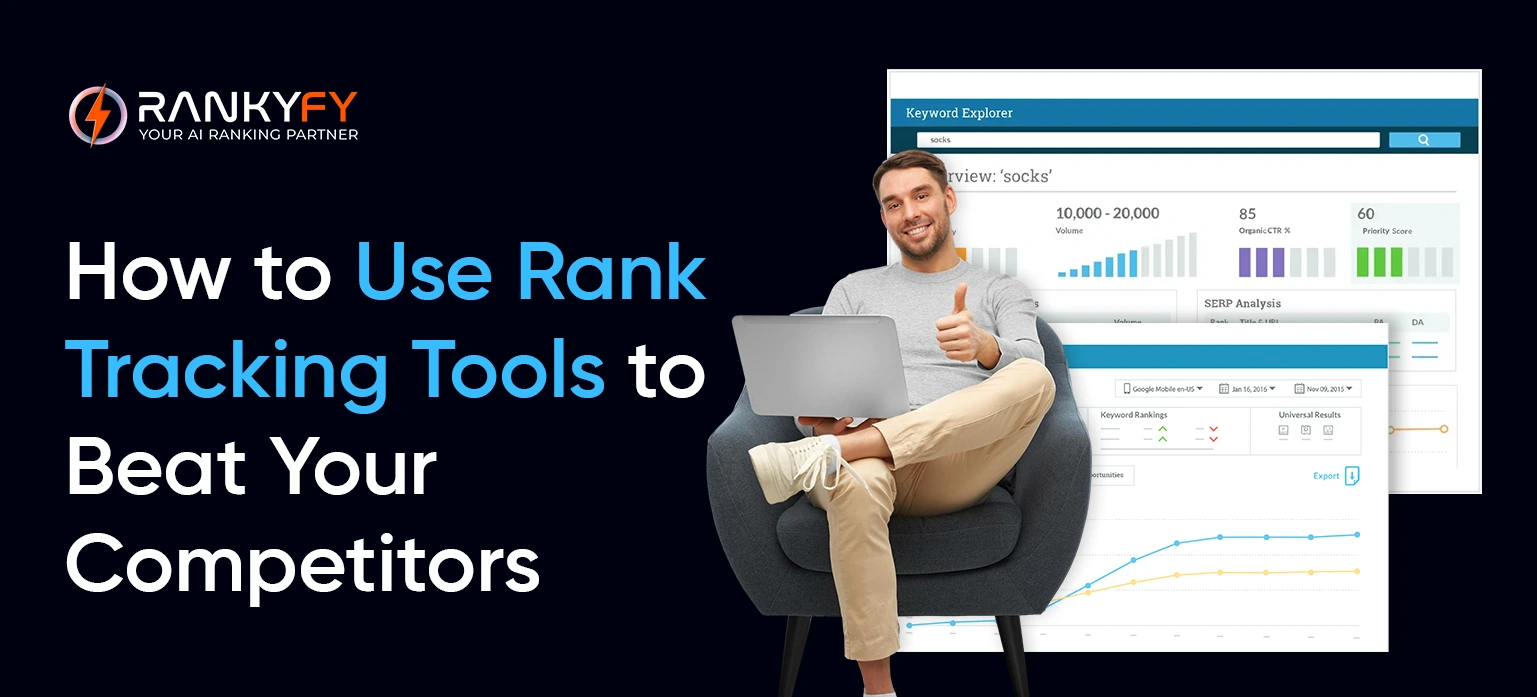
Tracking where a website ranks in Google search results can transform an average SEO strategy into a winning one. Rank tracking tools for SEO expose the brutal reality of where a website actually sits in Google versus where everyone assumes it sits.
This blog walks through everything needed to use rank tracking tools strategically from understanding what these platforms actually do, to choosing the right one for specific business needs, to analyzing competitor data that reveals exactly where market opportunities hide.
What Are SEO Rank Tracking Tools?
Rank trackers are surveillance systems for search positions. They automatically check Google hundreds of times daily, logging exactly where websites appear for chosen keywords across different locations and devices. No more incognito mode or manually searching phrases in five different cities. The tool does it while teams sleep, building historical records showing trends over weeks and months.Key Features to Look For
Essential features: Automated daily checks for all keywords, location-specific tracking (Chicago results differ from Miami), desktop and mobile comparisons, competitor position monitoring. Premium features: SERP screenshots capturing exact result layouts, featured snippet tracking, local pack monitoring, hourly updates during critical campaigns, white-label reports for agencies, API access for custom dashboards. Skip tools missing competitor tracking that's like playing poker without seeing other players' cards.Why Rank Tracking Is Important for Your SEO Strategy
Monitor Keyword Performance Over Time
Google tweaks rankings constantly. A site holding position 5 doesn't stay there automatically. Competitors publish new content, algorithm updates shift everything, technical glitches kill rankings overnight. Single checks mean nothing; position 8 today could've been 3 yesterday and might hit 15 tomorrow. Daily tracking separates random fluctuations from genuine problems requiring emergency fixes.Identify Opportunities and Gaps
The goldmine sits at positions 11-18. Keywords there already have traction Google considers the site relevant enough to rank, just not highly enough for clicks. A few solid backlinks or content improvements often push them onto page one where traffic lives. Rank trackers also spotlight "competitor keywords" terms where rivals dominate but the site ranks nowhere. Those gaps represent entire market segments waiting to be captured. Dive deeper into finding untapped keyword opportunities.Track Competitor Rankings
Competitors telegraph their entire strategy through rankings. When a rival suddenly owns position 2 for "enterprise cybersecurity solutions," they didn't get lucky they executed something specific. New comprehensive guide? Partnership with industry publication for backlinks? Technical overhaul boosting page speed? Rank trackers flag these moves instantly, letting teams reverse-engineer successful tactics and deploy countermeasures before losing significant market share.Measure ROI of SEO Efforts
Executives don't fund "better optimization" they fund revenue growth. Rank tracking bridges that gap. Show a keyword jumping from position 19 to 7, correlate it with a 340% traffic increase to that landing page, connect traffic to 23 new qualified leads worth $180K in pipeline. That's ROI. Without position tracking, SEO remains a black box expense that gets cut when budgets tighten.How to Choose the Right Rank Tracking Tool
Factors to Consider
Accuracy beats everything else. Cheap tools show estimated positions based on models worthless. Demand actual Google result checks. Update frequency depends on market volatility: stable B2B niches work fine with daily checks, news sites need hourly updates. Geographic precision matters enormously; a Vancouver business needs Vancouver data, not generic Canadian averages that mix Toronto and Calgary. Interface simplicity determines adoption rates; complicated dashboards collect dust. Budget spans $40-$700 monthly based on keyword volume and bells-and-whistles needed.Popular Tools Overview
SEMrush bundles rank tracking with keyword research, site audits, backlink analysis, PPC intelligence Swiss Army knife approach. Perfect for agencies managing ten clients but expensive for single sites. Ahrefs crushes competitor analysis, showing not just rankings but exact pages and backlink sources powering them. Google Search Console costs zero and pipes directly from Google, though it lacks competitor visibility and advanced analytics. AccuRanker strips away fluff, delivering pure rank tracking with ridiculous speed and visual clarity. Moz Pro splits the middle enough features for serious work, approachable enough for SEO beginners.Free vs. Paid Tools
Free tools handle hobby projects tracking five keywords. Updates arrive weekly, historical data vanishes after 30 days, competitor monitoring doesn't exist. Paid platforms justify costs for actual businesses: tracking 500+ keywords, daily or hourly updates, years of archived comparisons, full competitor surveillance, automated stakeholder reports, team collaboration features. The real question isn't free versus paid, it's which paid tool matches current needs and scales with growth.Step-by-Step Guide to Using Rank Tracking Tools
Setting Up Your Account
Registration wants standard stuff: company name, website URL, email. Snag trial periods when offered typically 7-14 days full access. Verification requires proving site ownership through HTML file upload, DNS record changes, or Google Analytics connection. This blocks random people from tracking competitors without permission.Adding Your Website and Keywords
Enter the main domain first. Add subdomains separately if they target different markets. Import keywords through CSV upload or manual entry. Smart organization prevents chaos later: cluster by product category ("running shoes," "basketball shoes"), search intent ("how to tie shoelaces" versus "buy Nike shoes online"), or funnel stage ("sneaker reviews" versus "sneaker stores near me"). Start learning with 50-100 crucial terms rather than dumping 800 random phrases.Setting Competitors to Track
Identify 3-5 direct rival companies chasing identical customers with similar offerings. Add their domains to monitoring. The platform starts checking their positions for target keywords and generates comparison charts. Avoid tracking 20 competitors; the resulting data tsunami becomes paralyzing rather than actionable.Understanding the Dashboard and Metrics
Keyword Rankings
Primary views list every tracked term with current positions. Standard columns display: today's rank, previous rank, change indicator, monthly search demand, traffic estimates. Filtering options narrow focus to page-one terms, biggest movers, or specific groups. Color coding speeds comprehension, green signals gains, red flags losses, gray means static. A three-second glance reveals campaign health.Search Volume & Traffic Estimates
Monthly search numbers indicate actual demand. Ranking #5 for a 20,000-volume keyword crushes #1 for a 150-volume keyword. Click-through rates fluctuate by position #1 captures roughly 28% of searches, #5 grabs around 9%, #10 gets maybe 3%. Tools multiply position CTR by search volume, calculating estimated monthly visitors. This math prioritizes high-leverage targets.SERP Features & Changes
Modern Google results packs featured snippets answering questions immediately, local three-packs displaying nearby businesses, knowledge panels summarizing entities, image galleries, video carousels, shopping ads. Rank trackers identify which features load for each keyword and who controls them. Owning a featured snippet often delivers more traffic than the #1 organic listing. The data exposes content structures and formats triggering these premium placements.Generating Reports and Insights
Automate weekly or monthly reports tailored to different audiences. Executives want executive summaries: overall visibility direction, top-performing terms, traffic projections, competitive positioning. SEO teams need granular breakdowns: every keyword's movement, SERP feature wins/losses, technical alerts, content opportunity lists. Export as PDFs, schedule email blasts, or distribute live dashboard URLs. Automation eliminates manual grunt work and keeps everyone aligned.How to Analyze Rank Tracking Data to Beat Competitors
Identifying Keywords You're Losing vs Winning
Sort by biggest position drops across 30 days. These scream for immediate investigation. Content outdated? Technical errors emerged? Competitors published killer resources? Address problems within days, not weeks, before traffic craters completely. Keywords rocketing up 10+ spots warrant analysis too—figuring out what worked enables repeating success elsewhere.Spotting Gaps in Competitor Strategies
Execute gap analysis revealing keywords where competitors hit page one while the site ranks nowhere. Real example: a rival sits at #3 for "cloud backup for dental practices" but the site doesn't crack the top 100. Visit their ranking page, dissect content comprehensiveness, audit backlink quality, note page structure and formatting. Then build something demonstrably better targeting that exact phrase. They literally handed over a roadmap to steal their traffic.Adjusting Content and SEO Strategy Based on Data
Data trapped in dashboards wastes money. Rankings sliding for a product line? Audit those pages page speed problems, stale content, broken technical elements. Competitors consistently ahead on specific topics? Their pages probably address angles the site misses, or they've secured stronger backlink profiles. Create legitimately superior content, promote it harder, earn better links. Monitor results over 6-8 weeks, then iterate based on what actually shifts positions, not theories.FAQ's
What is a rank tracking tool and why is it important?
Rank tracking software monitors website positions in search engines for chosen keywords across time. The importance? Teams can't improve invisible metrics. These platforms show which SEO efforts produce returns, which burn budget, and where competitors seize territory replacing assumptions with concrete numbers driving smarter resource allocation.How do I set up a rank tracking tool for my website?
Create an account, verify domain ownership through the platform's verification method, input target keywords with logical organization, configure tracking locations and devices, add competitor domains for comparative monitoring. Most platforms guide setup with prompts completing configuration in 15-20 minutes.Which rank tracking tools are best for SEO beginners and experts?
Beginners benefit from Google Search Console zero cost, clean interface, direct Google source data. Intermediate practitioners often choose Moz Pro for its educational resources and intuitive design. Advanced specialists typically select SEMrush or Ahrefs for comprehensive toolsets integrating competitor intelligence, backlink research, and keyword discovery with rank monitoring.How can I use rank tracking data to outperform my competitors?
Identify keywords where rivals rank superior positions, analyze their content quality and backlink sources, develop better resources targeting identical terms, track position changes weekly, refine approaches based on actual ranking shifts. Also target keywords where competitors rank weakly these lower-competition opportunities deliver faster wins with reduced effort.Can I track competitors' keyword rankings using these tools?
Absolutely. Nearly every rank tracking platform includes competitor monitoring capabilities. Add rival domains during setup, and the system tracks their positions for target keywords alongside the optimized site. This reveals their strongest terms, recent position changes, and comparative visibility metrics.The Bottom Line
Rank tracking separates winning SEO programs from budget black holes. Consistent monitoring exposes what drives actual results, where competitors advance, and which opportunities offer maximum returns. Companies avoiding this step watch organic traffic stagnate while rivals capture their prospects and revenue. The gap between tracking data and winning markets comes down to execution speed. Check rankings weekly minimum, investigate significant movements within 48 hours, adjust tactics based on evidence instead of gut feelings. Small improvements compound aggressively three keywords climbing from #9 to #4 can double organic traffic within 90 days. Rankyfy eliminates complexity with straightforward dashboards and actionable guidance. The platform transforms raw ranking numbers into strategic decisions producing measurable business growth, delivering enterprise-grade SEO capabilities for teams competing in demanding markets.What to read next

13 Proven Ways To Use the Meta Ad Library for Research
Meta Ads Library is a free research tool for marketers. The platform is known for...
Read More
Search Terms: Meaning & How to Use Them
Understanding search phrases is important to reach potential customers in a conversational tone. Search terms...
Read More
How to Migrate a Website Without Harming SEO (Complete Checklist)
How to Migrate a Website Without Harming SEO - Migrating a live website is a...
Read More
On-Page SEO Explained: A Complete Guide
What prevents your website from showing up at the top of search engine results? You...
Read More