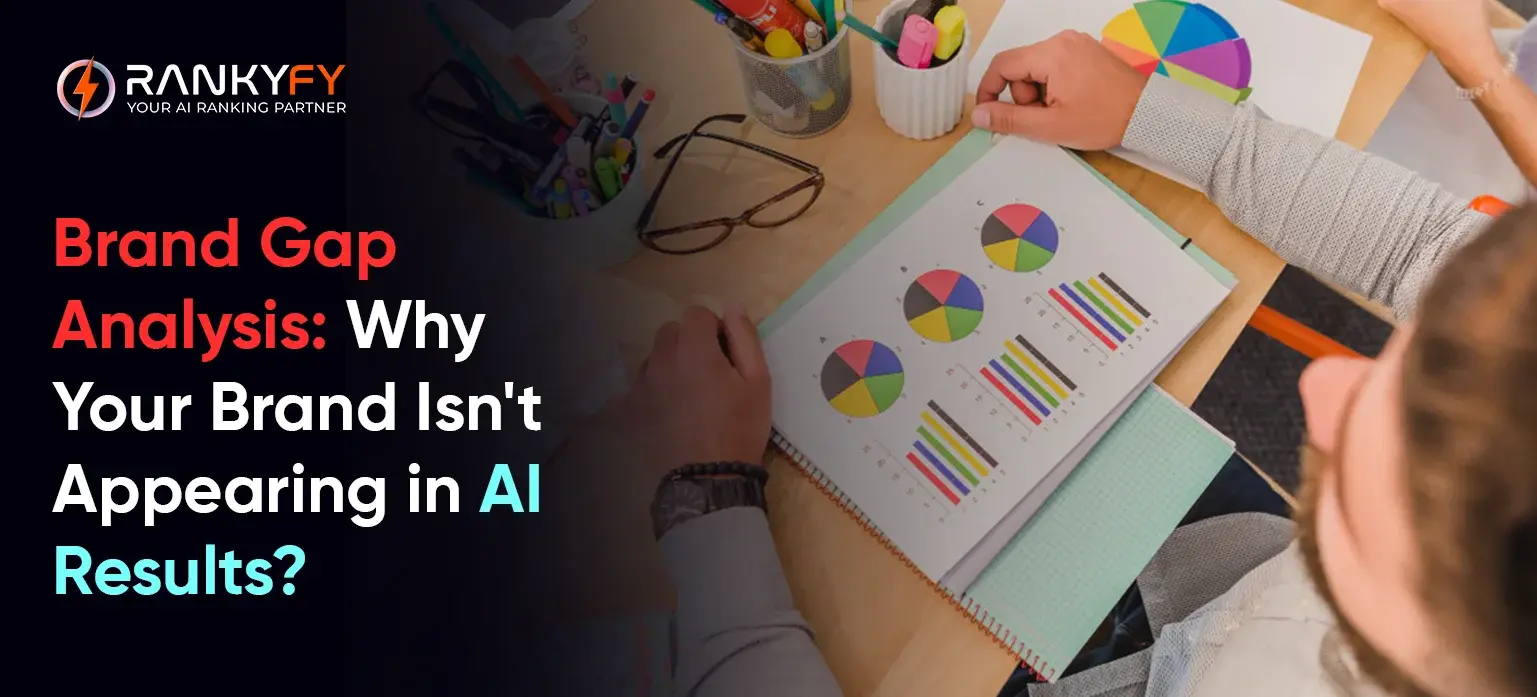
The manner in which people locate businesses online nowadays is fascinatingly changing. Not very long ago, everybody simply typed something into Google, went through the search results, and clicked on anything that looked decent. People are now just opening ChatGPT and asking it questions as though they are speaking to a friend. And this is what any business owner should be concerned about: their business may not even be discussed during such discussions, despite their years of effort to get their site to rank high on Google.
This invisible presence in AI conversations is what marketing experts are starting to call the brand gap. It's the gap between where a business thinks they are online and where AI actually knows about them. A company could be dominating Google rankings but remain completely unknown to AI chatbots that are now shaping buying decisions every single day.
What This Brand Gap Thing Actually Means
AI brand gap analysis is basically checking to see if AI tools even know a brand exists. Then, figuring out what they say about it when they do mention it. And most importantly, seeing if they'd actually recommend it to someone looking for that type of product. The big difference with AI search is that it doesn't show a list of options. Google gives you ten blue links, and you pick one. AI just gives you an answer. Maybe it mentions three brands. If a company isn't one of those three, it might as well not exist for that person.Why This Actually Matters More Than It Seems
If a brand doesn't show up when AI answers these questions, those customers are going to competitors instead. Just gone. And the business probably doesn't even know it's happening. Young people, especially, are starting to trust AI answers a lot. Some studies show they trust AI recommendations more than Google results now. That's a massive shift. And it's only getting bigger. This is why improving AI search visibility needs to be something every business thinks about starting right now.Why AI Doesn't Know About Some Brands
There are a few main reasons why brands don't appear in AI-powered search results. Let's break it down without all the jargon. First reason - there's just not enough information about the brand out there on the internet. AI learns about companies by reading a ton of content from everywhere. Articles, reviews, social media posts, news stories, forum discussions, all of it. If there's barely anything written about a company anywhere except on their own website, AI has nothing to learn from. Second reason - the brand says different things in different places. Imagine a company's website says they do marketing consulting. Their LinkedIn says they're a software company. Their Facebook says they do web design. AI reads all of this and goes "wait, what do these people actually do?" When AI gets confused, it just skips that brand entirely rather than risk giving bad information. Third reason - the brand isn't on websites that AI trusts. AI pays way more attention to certain types of sites. Big industry blogs, major review platforms like G2 or Capterra, news publications, that kind of thing. If a brand only exists on its own website and maybe Instagram, AI thinks, "This is probably not important enough to recommend." Fourth reason - everything the brand writes sounds like a sales pitch. AI is trained to give helpful, honest answers to people. When all the content about a brand is just "buy our product, we're amazing, here's why we're better than everyone," AI gets sceptical.- How to Actually Get AI to Notice a Brand
Why Checking This Regularly Actually Matters
AI brand gap analysis can't be a one-time thing. This needs to become something businesses check regularly, like every month or every quarter. AI tools are changing constantly. What worked last month might not work this month. New competitors show up. Old strategies stop working. If a business isn't checking regularly, it won't know when it becomes invisible. Here's how to actually do this checking. First, think about what questions potential customers would ask AI. Write down maybe ten or fifteen realistic questions. Then go ask those exact questions to ChatGPT, Claude, Perplexus, maybe a few others. Write down which brands get mentioned. Look at why those brands show up. What kind of stuff is AI saying about them? What sources is it pulling from? Then compare that to what's happening with the business doing the analysis. Are they showing up at all? If not, why not? What are the competitors who do show up doing differently? Think about optimizing brands for AI search as building a reputation in a new place. Not trying to trick anything or game the system. Just showing AI that the business knows what it's doing and actually helps people.FAQ’s
What is a "brand gap analysis" and why does it matter for AI search?
Brand gap analysis means checking to see if AI mentions a brand when it should. This matters because tons of people now ask ChatGPT or Claude for recommendations instead of googling, so if AI doesn't mention a brand during those conversations, that business is losing customers even with great Google rankings.How does AI search visibility differ from traditional SEO visibility?
With regular SEO, people see a list of links and pick which ones to click. With AI search, AI just tells them the answer directly, maybe mentioning only two or three brands total. A business can be number one on Google but completely invisible to AI because they work on totally different principles.What steps are involved in conducting a brand gap analysis for generative AI search engines?
Write down questions customers would ask AI, then ask those to different AI tools and write down which brands they mention. Figure out why some brands keep showing up while others don't, compare what competitors are doing differently, and make a plan to fix whatever's missing.What common reasons cause a brand to be "invisible" in AI-powered search results?
Usually, there's not enough stuff written about the brand online, or the brand describes itself differently on different platforms, which confuses AI. Maybe they're not mentioned on sites AI trusts like industry blogs, or all their content sounds too much like advertising instead of helping people.How can a small business improve its brand visibility in AI search and overcome the brand gap?
Small businesses are advised to produce useful content that educates people on something, be mentioned in blogs related to the industry and on review sites and encourage the customer to write in-depth reviews. Ensure that the business is written in the same manner on all places online and post knowledge without charge using guides and case studies.Conclusion
AI search is changing how customers find businesses. Being good at regular SEO isn't enough anymore. Businesses need to make sure AI knows about them and trusts them enough to recommend them to people. The good news is that this can be improved with the right approach. Tools like Rankyfy can help businesses identify their brand gaps, track their AI visibility across different platforms, and implement strategies to improve their presence in AI-powered search results.What to read next
How to Create an Effective SEO Report in 2026 (+ Free Template)
SEO has changed a lot in the last few years, but one thing hasn’t: clients...
Read More
How Quickly AI Search Engines Pick Up New Content?
The manner in which search engines find and bring out information has had a dramatic...
Read More
Short vs. Long AI Content: Which is Actually Driving Results in 2026?
Search engines are evolving so quickly in 2026. AI affects the content side. The question...
Read More
SEO & User Experience: Simple Ways to Improve Rankings Fast
In the current competitive digital world, being ranked on Google is no longer a matter...
Read More