Table of content
Google has just dropped something huge to search, and it is confusing traffic to websites. When you are relying on Google to drive traffic to your business, you must know what is going on now.
This is not the algorithm optimization trick that will be solved within several weeks by SEO professionals. Meanwhile, we are talking about a revolutionary change in the way people locate information on the internet. Have the regulations been effective over the last ten years? Most of them have simply been rewritten. This change has an impact on your bottom line regardless of whether you are operating an e-commerce store, publishing content, or just managing a local business.
Let's break down what Google AI mode actually is and what you need to do about it.
What is Google AI Mode? Here's the Straight Answer
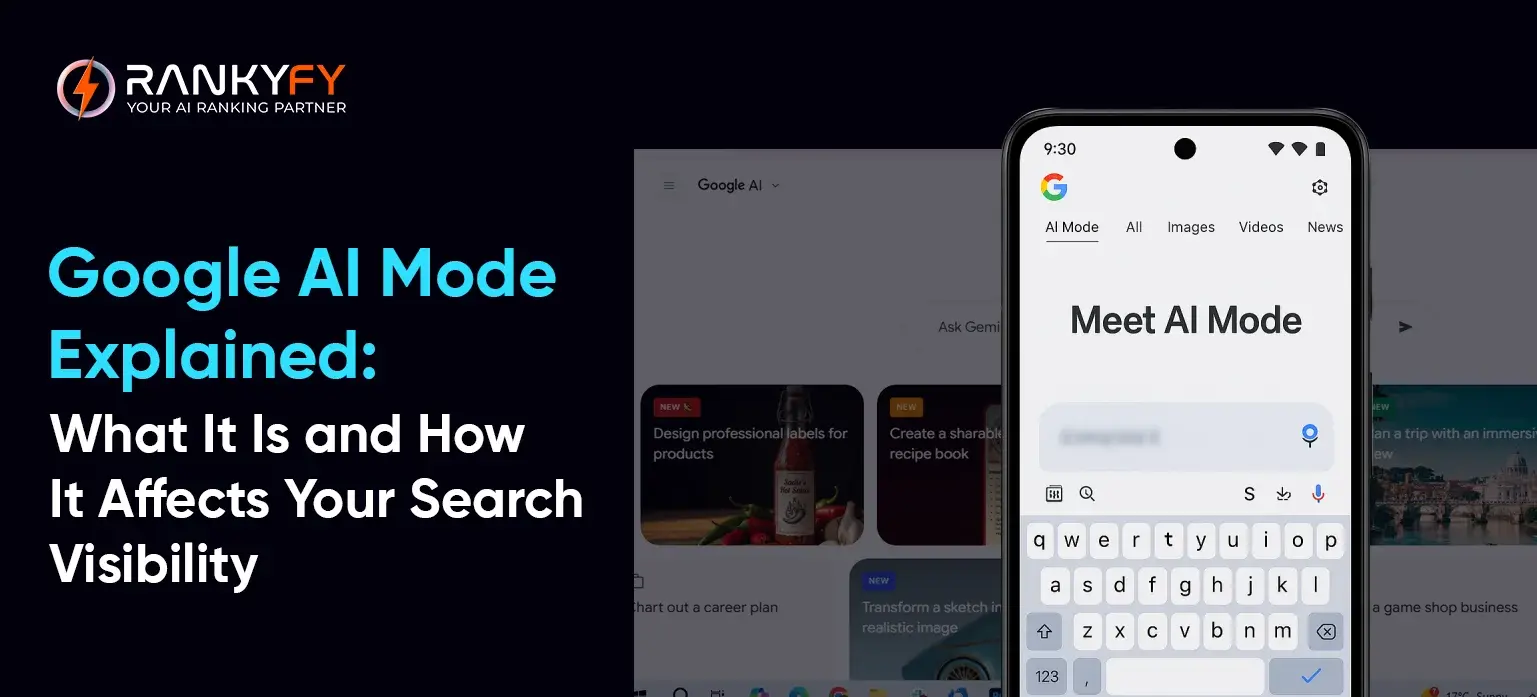
What is Google AI mode? It's Google's new way of answering questions without making you click around. You search for something, and instead of seeing a list of links, you get an answer written by AI that combines info from different sites. The difference from old-school search is huge. Before, Google showed you where to find answers. Now it just gives you the answer directly, pulls quotes from websites, and calls it a day. Why does this matter? Because fewer people are clicking through to websites. They're getting what they need right there on Google's page.The Main Google AI Mode Features You'll Actually Notice
Google AI mode features aren't complicated:- You can talk to it like it's a person. Ask something, then ask another related question without starting over
- It grabs stuff from 5-10 websites and mashes it together into one response
- There are suggested questions below each answer if you want to keep digging
- Pictures show up when they're useful
- It supposedly remembers what you like, though honestly, this part's hit or miss
Google AI Mode for SEO: What Changed and What Didn't
Let's talk about Google AI mode for SEO without the usual marketing fluff. Basic SEO still works. Good content, decent backlinks, fast site, mobile-friendly, all that matters. But there's a new problem: even if you rank #1, people might not click because the AI already answered their question. Sites with detailed guides and original stuff get referenced more. The AI loves citing sources that clearly know their topic inside and out. Quick-answer content is dying. If your whole strategy was "write 500 words answering simple questions," you're in trouble. The AI just steals your answer, and most people never visit your site. Authority matters way more now. The AI picks sources that look legit, established sites, expert authors, proper citations, that kind of thing. You can't trick this system with keyword stuffing or sketchy link building. The AI actually reads your content (or something close enough to reading that the difference doesn't matter).The Google AI Mode Impact on Websites Is Already Here
The Google AI mode impact on websites isn't theoretical. It's happening now: Recipe blogs got hammered first. People just wanted the cooking temperature and time, boom, AI gives it to them, no click needed. How-to sites are struggling unless they have video or step-by-step images. Text instructions alone? The AI can reproduce those. Review sites are mixed. Product comparisons still get clicks because people want to see everything before buying. But "is X good?" questions get answered without visits. News sites still do okay with breaking stories and deep investigations. The AI can't replicate original reporting. Local businesses actually might benefit. When someone asks "where should I eat tonight in downtown," the AI considers local results, and people still need directions, hours, menus stuff that requires clicking through. Affiliate sites that just regurgitate product specs are toast. If you're not adding real value, the AI makes you irrelevant.Practical Steps for How to Use Google AI Mode in 2026 USA
How to use Google AI mode in 2026 USA means different things depending on whether you're searching or trying to get found:For regular users:
- Type actual sentences instead of keywords. "What's the best way to remove coffee stains from carpet" works better than "remove coffee stains from carpet."
- Ask follow-ups. The AI remembers context, so you can say "what if the stain is old?" without re-explaining
- Check the sources. The AI screws up sometimes, so click through to verify important stuff
For website owners:
- Write comprehensive content that can't be summarized in three sentences. 2,000+ word guides on specific topics get cited more than short posts
- Add things AI can't replicate original research, data you collected yourself, expert interviews, downloadable tools
- Make your expertise obvious. Author bios, credentials, portfolio of work—this stuff signals authority
- Use proper structure. Headers, lists, and clear sections help the AI understand and extract your content
- Get mentioned on quality sites. If reputable sources link to you or cite you, the AI notices
- Create content worth visiting. If the AI summary is enough, why would anyone click? Give them a reason, maybe it's an interactive calculator, maybe it's a community discussion, maybe it's exclusive data
FAQ’s
What is Google AI mode and how does it work?
Google AI Mode is a search feature that generates direct answers using artificial intelligence instead of just showing website links. When you search, it reads content from multiple sources, understands your question, and writes a response combining information from those sites. It includes citations so you can check sources, and you can ask follow-up questions that build on previous answers. The AI remembers conversation context, making it feel more like chatting than traditional searching.How do I enable or access Google AI Mode in the United States?
Most people in the United States get Google AI Mode automatically as Google rolls it out. It shows up as AI-generated answers in your regular search results. You'll see longer response boxes with source links instead of just the typical list of websites. If you don't see it yet, check Google Search Labs in your Google account settings, where new features sometimes need manual activation. The rollout is gradual, so not everyone has access simultaneously.What features and benefits does Google AI Mode offer?
Main features include conversational search that remembers context between questions, answers compiled from multiple websites instead of you reading each one separately, automatically suggested follow-up questions, relevant images included in responses, and answers that adjust based on your search history. The biggest practical benefit is the speed you get comprehensive answers immediately without opening ten browser tabs. It's particularly useful for research, comparison questions, and learning about unfamiliar topics.Is Google AI mode different from AI Overviews or regular Google Search?
Yes, these are three different things. A regular Google Search displays ranked website links. AI Overviews (previously called SGE snippets) provide a brief AI summary at the top of traditional results. Google AI Mode is a fuller experience essentially a conversation interface where you interact primarily with AI responses rather than clicking through links. AI Mode is more interactive, remembers your conversation history, and provides more detailed responses than AI Overviews.How will Google AI mode affect SEO and website traffic in 2026?
Website traffic patterns will change substantially by 2026. Sites answering simple questions will lose clicks because AI provides those answers directly. However, authoritative sites creating in-depth, expert content will get cited in AI responses and may gain qualified traffic from users wanting complete information. SEO strategy needs to shift toward becoming a trusted source, the AI cites, creating content too valuable to summarize, and offering unique features, tools, community, and original data that require visiting your actual site. Surface-level content won't generate traffic anymore.The Bottom Line
Google AI mode is now the default experience for millions of searches. It'll be the standard way most people search by 2026. You can't avoid it. You can't opt out. Your choices are adapt or watch your traffic disappear. The good news? Quality content from real experts is more valuable than ever. The AI needs sources, and it prefers good ones. If you actually know your stuff and share genuine insights, you'll get cited. The bad news? Simply "doing SEO" isn't enough anymore. You need to be legitimately good at whatever your site is about. There's no shortcut around that. Search isn't dead. Websites aren't dead. But lazy content that just repackages what everyone else said?What to read next

How to Create an Effective SEO Report in 2026 (+ Free Template)
SEO has changed a lot in the last few years, but one thing hasn’t: clients...
Read More
How Quickly AI Search Engines Pick Up New Content?
The manner in which search engines find and bring out information has had a dramatic...
Read More
Short vs. Long AI Content: Which is Actually Driving Results in 2026?
Search engines are evolving so quickly in 2026. AI affects the content side. The question...
Read More
SEO & User Experience: Simple Ways to Improve Rankings Fast
In the current competitive digital world, being ranked on Google is no longer a matter...
Read More