An SEO audit is a systematic review of a website's technical health, on-page elements, content quality, internal linking, performance, and backlink profile. It helps identify what is working, what is holding a site back, and which fixes deserve priority. With a website audit tool like RankyFy, businesses can uncover hidden technical errors, content gaps, and structural weaknesses that quietly limit organic traffic, even when the website looks polished on the surface.
This blog explains why SEO audits matter through nine key areas: technical SEO, on-page optimization, content gaps, internal linking, page performance, duplicate content, backlink health, competitor analysis, and prioritization. Each area highlights a different aspect of overall SEO health.
Run a Comprehensive Website Audit with RankyFy
Top 9 Reasons Why an SEO Audit is Important
1. An SEO Audit Finds Technical Issues
Technical SEO issues can obstruct search engines from properly crawling, indexing, or understanding your website.
Why is a technical SEO audit important?
It helps identify
-
Broken links
-
Crawl errors
-
Indexing issues
-
Missing or incorrect canonical tags
-
XML sitemap problems
-
Redirect issues
-
Duplicate URLs
-
Poor site architecture
-
Mobile usability problems
Even with excellent website content, your website page can struggle to appear in search results.
Why It Matters
Technical SEO builds a strong foundation for organic visibility. Fixing the technical health of your site can make it easier for search engines to discover your vital pages.
2. It Helps Improve On-Page SEO
All the important website pages should be optimized to user search intent and the target topic.
With an SEO audit, you can evaluate the key on-page elements like:
-
Title tags
-
Meta descriptions
-
Heading structure
-
URL structure
-
Keyword usage
-
Content relevance
-
Internal links
-
Image optimization
-
Content length and depth
The Result
With these targeted improvements, you can identify what's actually wrong with your website page instead of rewriting the entire page.
3. It Identifies Content Gaps
Publishing more articles alone does not guarantee more traffic.
An SEO audit can reveal:
-
Thin content
-
Outdated articles
-
Duplicate content
-
Missing topics
-
Pages targeting similar keywords
-
Weak search-intent alignment
-
Content with declining performance
Content Audit vs. SEO Audit
A content audit focuses primarily on the quality and performance of your content. Whereas a broader SEO audit combines related factors like on-page SEO, technical SEO, internal linking, etc.
4. It Improves Website Structure and Internal Linking
Internal links play an essential role in helping users navigate your website. It also ensures search engines understand the relationship between pages.
An audit can reveal whether:
-
Important pages have enough internal links
-
Orphan pages exist
-
Anchor text is descriptive
-
Related content is properly connected
-
Your site's hierarchy is logical
Benefits of SEO Audits
A strong internal linking structure can create a better navigation experience. It also helps distribute authority throughout your website.
5. It Helps Improve Page Experience and Performance
Good website performance can improve both user experience and SEO.
What performance-related issues can an SEO audit uncover?
-
Slow-loading pages
-
Large image files
-
Unnecessary scripts
-
Poor mobile performance
-
Layout instability
-
Resource-loading issues
Google's Core Web Vitals provide standardized measurements for aspects of page experience, including loading performance, responsiveness, and visual stability.
Why Performance Matters
A slow website can increase frustration and abandonment. Improving page experience and performance can broaden your organic search strategy.
6. It Helps Identify Duplicate and Cannibalized Content
An uncontrolled overlap of multiple pages with the same topic can create confusion about which page should rank.
What can an SEO audit identify?
-
Duplicate content
-
Near-duplicate pages
-
Similar title tags
-
More than one page targeting the same search intent
-
Keyword cannibalization
-
Repetitive content
For example, if three blog posts target nearly identical queries, you may need to consolidate them or differentiate their search intent.
The Goal
Every important page should have a clear purpose.
When pages serve distinct search intents and have unique value, it becomes easier to build a logical website architecture.
7. It Helps Strengthen Your Backlink Profile
Backlinks continue to be a vital part of SEO. However, their value depends on factors like quality, context, and relevance.
Understand your backlink profile and flag the following issues through an SEO audit:
-
Referring domains
-
Backlink volume
-
Link relevance
-
Anchor text
-
Lost backlinks
-
New backlinks
-
Potentially suspicious links
-
Competitor backlink gaps
The primary objective is not collecting the most backlinks. It's to develop a relevant and credible backlink profile.
Run a Comprehensive Website Audit with RankyFy
8. It Helps You Understand Competitors
You cannot work on SEO in isolation and expect outcomes.
Competitor analysis helps you compete against other pages for the same search visibility. Tracking your competitors can reveal opportunities to grow your own website.
What can a competitive SEO audit examine?
-
Competitor keywords
-
Top-performing pages
-
Backlinks
-
Content topics
-
SERP presence
-
Site structure
-
Search intent
-
Content gaps
For example, you may discover that competitors consistently rank because they provide more comprehensive content around a particular topic.
That insight can influence your own content and optimization strategy.
Competitor Analysis Can Answer Questions Such As:
-
Which topics are competitors ranking for that we aren't?
-
Which pages attract the most backlinks?
-
What types of content dominate the SERPs?
These insights can turn an SEO audit into a strategic planning exercise.
9. It Helps Prioritize SEO Improvements
Perhaps the biggest advantage of an SEO audit is that it gives you a roadmap.
Without a thorough SEO audit, an SEO team ends up spending excessive time on low-impact tasks. This can leave important issues unresolved.
A good audit helps prioritize issues according to factors such as:
-
Severity
-
Organic traffic impact
-
Business importance
-
Number of affected pages
-
Difficulty of implementation
-
Potential SEO benefit
Example SEO Priority Framework
| Issue | Potential Impact | Priority |
|---|---|---|
| Important pages blocked from indexing | Very High | Immediate |
| Broken internal links | Medium | High |
| Missing title tags | High | High |
| Slow mobile pages | High | High |
| Outdated blog content | Medium | Medium |
| Minor image metadata issues | Low | Lower |
What Should an SEO Audit Include?
| SEO Area | What to Check |
|---|---|
| Technical SEO | Crawling, indexing, redirects, sitemap |
| On-Page SEO | Titles, headings, content, metadata |
| Content | Relevance, quality, duplication, freshness |
| Internal Linking | Orphan pages, anchor text, link structure |
| Performance | Speed, Core Web Vitals, mobile experience |
| Backlinks | Referring domains, quality, lost links |
| Competitors | Keywords, content, links, SERP performance |
| Local SEO | Business information and local visibility |
| Structured Data | Relevant schema implementation |
| User Experience | Navigation, readability, mobile usability |
How RankyFy Helps With an SEO Audit
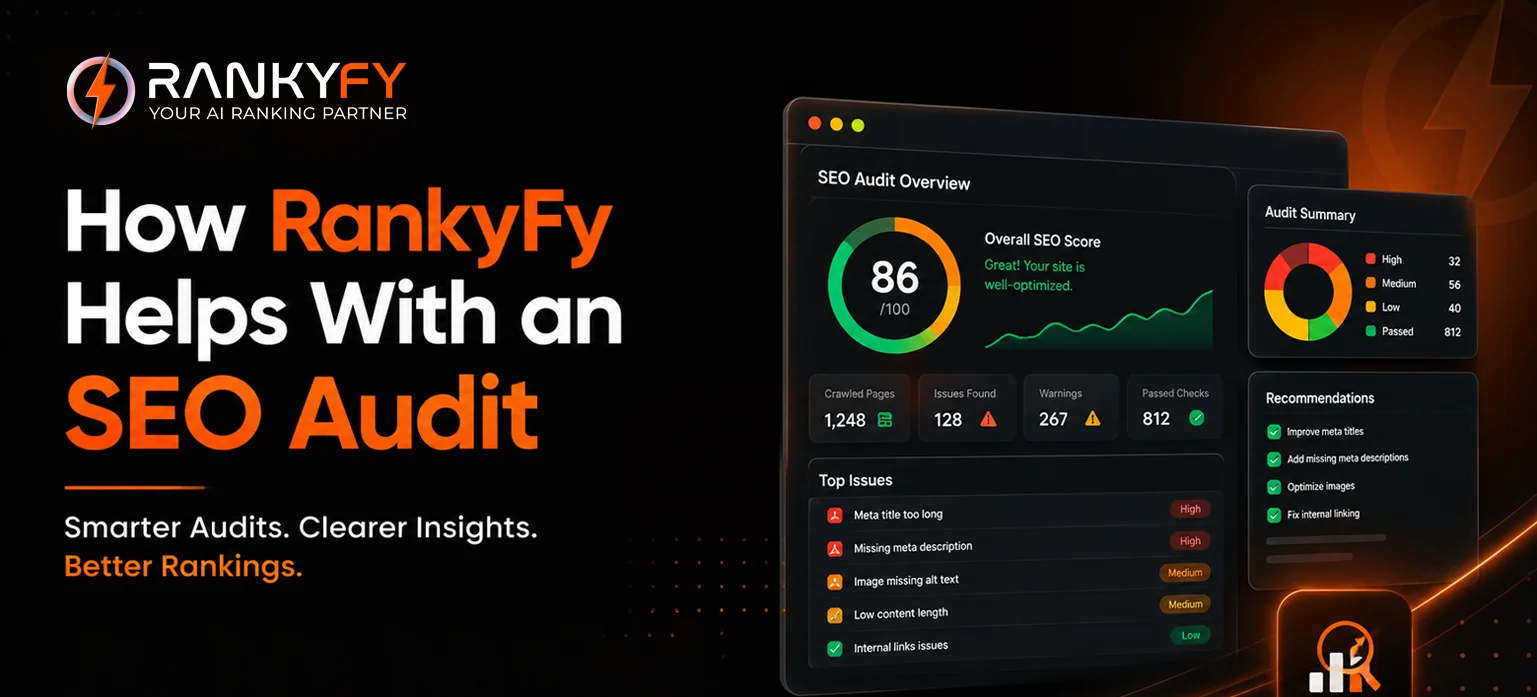
Performing an SEO audit manually can be a time-consuming process. Especially when your website includes several URLs.
RankyFy offers a quick, comprehensive SEO audit to identify all issues from a single centralized dashboard.
With the website audit tool, RankyFy, SEO teams can review areas such as:
-
Technical SEO issues
-
On-page optimization
-
Website performance
-
Content metrics
-
Internal and external links
-
Page-level SEO scores
-
Keyword performance
-
Competitor insights
-
Backlink data
With RankyFy, you get a more actionable and downloadable SEO audit report. The website audit tool provides an in-depth audit analysis with prioritization.
How Often Should You Conduct an SEO Audit?
There is no right answer.
When should you consider an SEO audit?
-
Prior website redesign
-
After a major migration
-
Unexpected drop in organic traffic
-
When rankings decline
-
After significant technical changes
-
When publishing large amounts of new content
-
Periodically as part of ongoing SEO management
What to Do After an SEO Audit
Once you've identified problems:
1. Categorize the Issues
Group your analysis findings into categories like content, performance, backlinks, etc.
2. Prioritize Them
Divide high-impact and low-impact issues.
3. Assign Responsibilities
Divide issues based on the relevant professionals. Technical issues may require developers. Content improvement can be handled by content writers. Optimization issues are for SEO professionals.
4. Implement Changes
Fix the issues systematically and document significant changes.
5. Monitor Outcomes
Keep track of rankings, traffic, conversions, and indexing after implementation.
6. Re-Audit
Run another SEO audit to confirm the problem resolution.
Run a Comprehensive Website Audit with RankyFy
Last Thoughts
RankyFy brings technical, on-page, content, performance, and backlink insights into one centralized dashboard. Instead of juggling multiple tools or guessing why a page underperforms, teams can use RankyFy's site-wide and page-level metrics. From word count and readability to heading structure and duplicate-content status, RankyFy pinpoints exactly what needs attention and why.
Ready to see what's holding your website back? Try RankyFy today and turn your next SEO audit into a clear, actionable growth strategy.
What to read next

How to Scrape Data from Google Maps: A Complete Guide
How to scrape data from Google Maps is a common question among modern sales teams,...
Read More
How to Audit Backlinks with the RankyFy Tool
Audit Backlinks with the RankyFy Tool to protect your website from search engine penalties and...
Read More
How to Find Competitors’ Backlinks with the RankyFy Tool
RankyFy Tool helps analyze competitors’ backlinks and uncover the link-building tactics supporting their search visibility....
Read More
How to Find Low-Competition Keywords With RankyFy Keyword Difficulty Checker
To find low-competition keywords using the RankyFy Keyword Difficulty Checker, you must filter for scores...
Read More