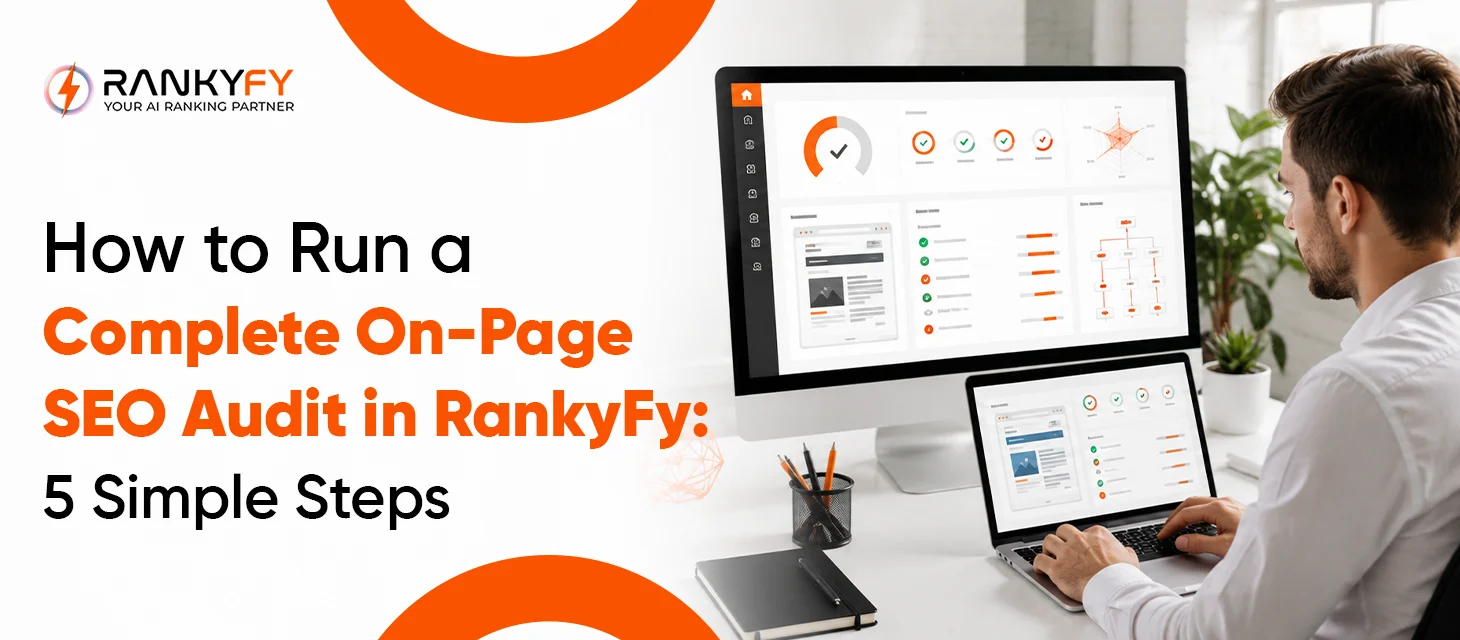
RankyFy simplifies On-Page SEO Audits by quickly identifying issues that affect your search rankings. A thorough audit is the foundation of organic growth, helping search engines better understand your content, keywords, and site structure. With automated insights and actionable recommendations, RankyFy makes it easy to optimize your website and improve SEO performance.
Run a Complete On-Page SEO Audit in RankyFy and Fix Issues Today.
In this guide, you will learn exactly how to run a complete on-page SEO audit in RankyFy using 5 simple steps.
Why On-Page SEO Audits Matter
Before running a complete on-page SEO audit in RankyFy, it is critical to understand the need for it.
A proper audit helps you identify:
-
Content optimization opportunities
-
Weak page structures
-
Missing SEO elements
-
Duplicate content issues
-
Internal linking gaps
-
Image optimization problems
-
Technical SEO weaknesses
With regular website audits, you can ensure your pages are optimized for both traditional and AI-driven search engines.
Simple On-Page SEO Audit Steps Using RankyFy
Step 1: Enter Your Website URL and Generate the Audit
Getting started is simple.
The first step is to enter your website URL into RankyFy. Once it's done, you can immediately analyze your entire website.
Manual audits require multiple tools, but with RankyFy, you get everything in a single dashboard:
-
Content quality
-
Page structure
-
Technical SEO signals
-
Metadata
-
Internal linking
-
Heading hierarchy
-
Image optimization
RankyFy presents the entire result in a clean and easy-to-understand dashboard. It depicts your entire website's SEO health quickly.
Because of this, you can eliminate the guesswork and get started with optimization.
Step 2: Review Site-Wide Content Metrics
At the top of the dashboard is the Site-Wide Content Metrics section. This section offers a high-level snapshot of your website's content health.
Instead of reviewing each page individually, RankyFy offers a quick analysis across your entire website.
Metrics Included
| Metric | What It Measures |
|---|---|
| Average Word Count | Content depth across pages |
| Readability Score | How easy is the content to read |
| Keyword Density | Keyword usage across content |
| Total Internal Links | Internal linking structure |
| External Links | Outbound link usage |
| Total Images | Visual content utilization |
Step 3: Analyze Heading Structure Across the Website
Directly below the content metrics is the Heading Structure Summary.
Proper heading structure is essential for optimum SEO and user experience. And Rankyfy simplifies this task for you.
RankyFy automatically analyzes heading usage across your website and displays:
-
H1 distribution
-
H2 distribution
-
H3 distribution
Why Heading Structure Matters
A strong heading hierarchy helps:
-
Improve content readability
-
Support keyword relevance
-
Enhance search engine understanding
-
Enhance user engagement
Most common audit issues include the following:
-
Missing H1 tags
-
Several H1 tags on a page
-
Poor H2 organization
-
Inconsistent heading structures
Step 4: Dive Into the Analyzed Pages Section
Now that you have reviewed the site-wide metrics, the next step is to examine individual pages.
The Analyzed Pages section offers an SEO performance summary for every crawled URL.
Instead of opening multiple reports, here you can quickly compare pages and identify attention points.
For every URL, RankyFy provides:
-
SEO Score
-
Content Score
-
On-Page Score
-
Technical Score
-
Understanding the Scores
SEO Score
Provides an overall assessment of page optimization.
Content Score
Evaluates the quality, depth, and relevance of your content.
On-Page Score
Tracks the page-level SEO elements
Technical Score
Reviews technical SEO factors affecting performance.
Step 5: Review Detailed Page-Level SEO Insights
The real power of RankyFy becomes visible when you open an individual page report.
You get an in-depth breakdown of the key SEO features. RankyFy transforms complex data into actionable insights.
Internal Backlinks
Review how many internal links point to the page.
Strong internal linking helps:
-
Distribute authority
-
Improve crawlability
-
Support topical clusters
Pages with few internal backlinks may struggle to rank despite having quality content.
Total Images
Images contribute to user engagement and content quality.
RankyFy tracks image usage across every page.
This helps identify:
-
Pages lacking visual content
-
Overloaded pages
-
Image optimization opportunities
-
Images Without Alt Text
Image alt text remains an important accessibility and SEO factor.
RankyFy highlights images missing alt attributes so they can be optimized quickly.
Benefits include:
-
Improved accessibility
-
Better image search visibility
-
Additional contextual relevance
-
Heading Structure
Beyond site-wide summaries, RankyFy shows page-specific heading structures.
This helps identify:
-
Missing headings
-
Duplicate headings
-
Poor content organization
A well-structured page is easier for both users and search engines to understand.
Title Length
Title tags significantly influence rankings and click-through rates.
RankyFy evaluates title length and helps identify:
-
Too long or short titles
-
Upcoming optimization opportunities
-
Irrelevant descriptions
A well-optimized title is essential to improve search result visibility.
Meta Description Length
Although not a ranking factor, meta descriptions can still impact user clicks.
RankyFy highlights:
-
Missing descriptions
-
Short descriptions
-
Optimisation opportunities
A well-crafted meta description can significantly improve CTR and yield organic traffic.
Page Type
Understanding page classifications helps organize optimization efforts.
RankyFy identifies page types so you can prioritize improvements strategically.
Examples include:
-
Blog posts
-
Service pages
-
Landing pages
-
Product pages
Different page types often require different optimization approaches.
Duplicate Content Status
Duplicate content can dilute ranking signals and create indexing issues.
RankyFy helps identify pages with duplicate or highly similar content.
Addressing duplicate content issues can improve:
-
Search visibility
-
Crawl efficiency
-
Keyword targeting
-
Compare Multiple Pages Side by Side
One of the most valuable features of RankyFy's On-Page SEO dashboard is the ability to compare URLs quickly.
Each page displays its individual:
-
SEO Score
-
Content Score
-
On-Page Score
-
Technical Score
This allows you to:
-
Identify underperforming pages
-
Prioritize updates
-
Spot optimization patterns
-
Measure content quality at scale
Why RankyFy Makes On-Page SEO Audits Easier
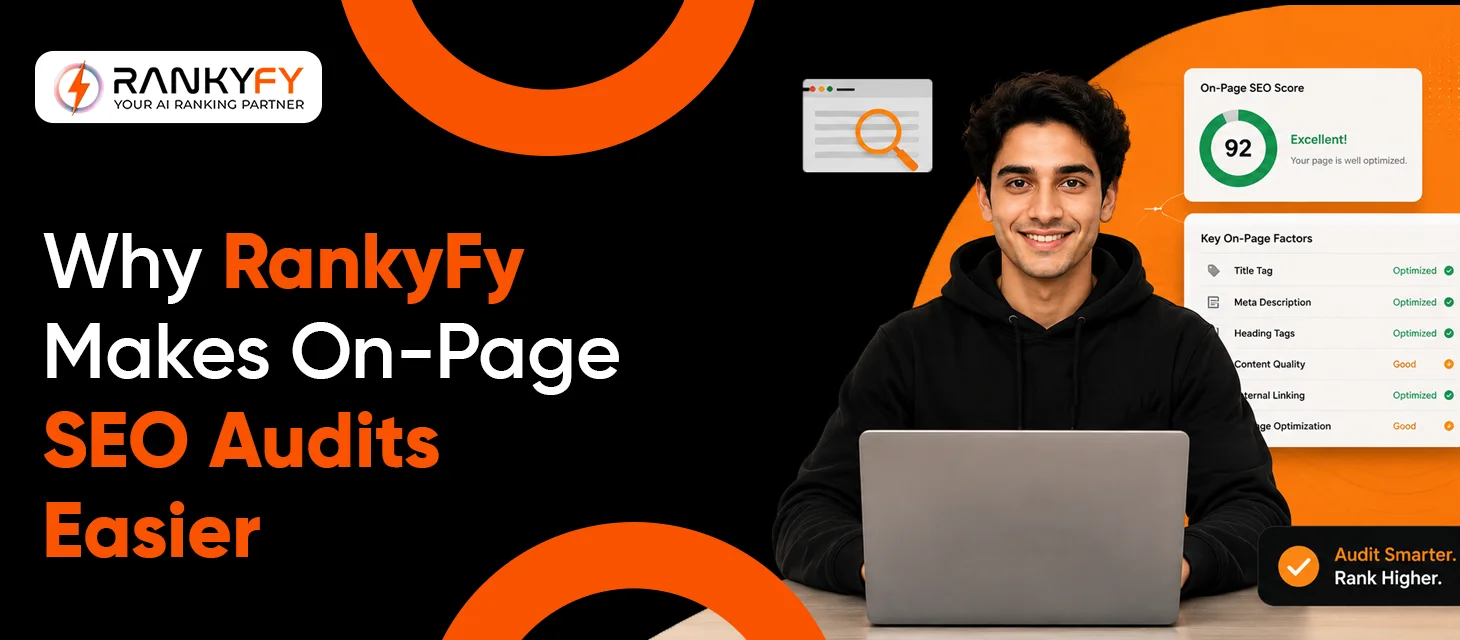
Your traditional audit process consists of multiple tools, spreadsheets, and laborious, lengthy manual analysis.
With RankyFy, you can carry out your everyday manual audits faster and automate the entire workflow.
Why choose RankyFy?
-
Instant website analysis
-
Site-wide content metrics
-
Heading structure visualization
-
Comprehensive page-level insights
-
Internal linking analysis
-
Image SEO monitoring
-
Duplicate content detection
-
Easy page comparison
Run a Complete On-Page SEO Audit in RankyFy and Fix Issues Today.
Last Thoughts
Want to run a quick but detailed on-page SEO audit for your website? RankyFy is the best tool for you! Sign up on RankyFy and audit your website in 5 simple steps today!
What to read next

What Are the Best AI Search Visibility Monitoring Tools
AI Search Visibility Monitoring Tools like RankyFy track how often, how early, and in what...
Read More
How to Find and Fix SEO Errors on Your Website with the RankyFy Tool
RankyFy is an all-in-one SEO platform that helps you find your website's hidden technical flaws...
Read More
How to Fix Website Issues with an SEO Analyzer
Fixing website issues with an SEO analyzer involves scanning your site for technical, on-page, and...
Read More
How to Audit Your Website Fast: A Step-by-Step Checklist by RankyFy
Audit your website with RankyFy’s practical, easy-to-follow checklist built for busy business owners, marketers, and...
Read More