
Analyzing similar businesses in your niche is not optional. When entering a market, competitor analysis is the first step to managing your strategies. A brand uses it to optimize its performance, identify new opportunities, and monitor market trends. It is essential to understand how to stay competitive with other niche brands.
However, if you do not correctly identify your competition, you might not benefit from competitor analysis. To grow organically, you must first understand which websites compete with yours in search results and visibility. This guide is all you need to understand how to find your business competitors online.
Why Finding Competitor Websites Matters
Competition online is rarely obvious. The businesses you see offline are often not the same brands ranking above you on search engines. Many companies lose traffic simply because they focus on familiar names instead of actual digital competitors.
Finding competitor websites helps you understand:
-
What keywords do they target
-
How do they attract traffic
-
Why do they rank higher
-
Where can you find better opportunities
This clarity allows brands to build smarter SEO strategies. These strategies can help you manage your content and advertising to reach a wider audience.
How To Find My Competitor's Website Online

Here is a simple guide to get you started with your research.
-
Use Google Search to Identify Competitor Websites
The most direct way to find competitors is through search engine results.
How to Do It:
-
Search for your primary service or product keyword
-
Analyze the top 10 organic results
-
Exclude your own website
-
List recurring domains
-
Analyze “Related Searches”
Google provides valuable competitor clues through:
-
Related searches
-
People Also Ask (PAA) sections
These areas highlight:
-
Alternative brands
-
Similar services
-
Competitors targeting adjacent keywords
By clicking through these results, you uncover secondary competitor websites you may have missed.
-
Use Competitor Discovery Tools
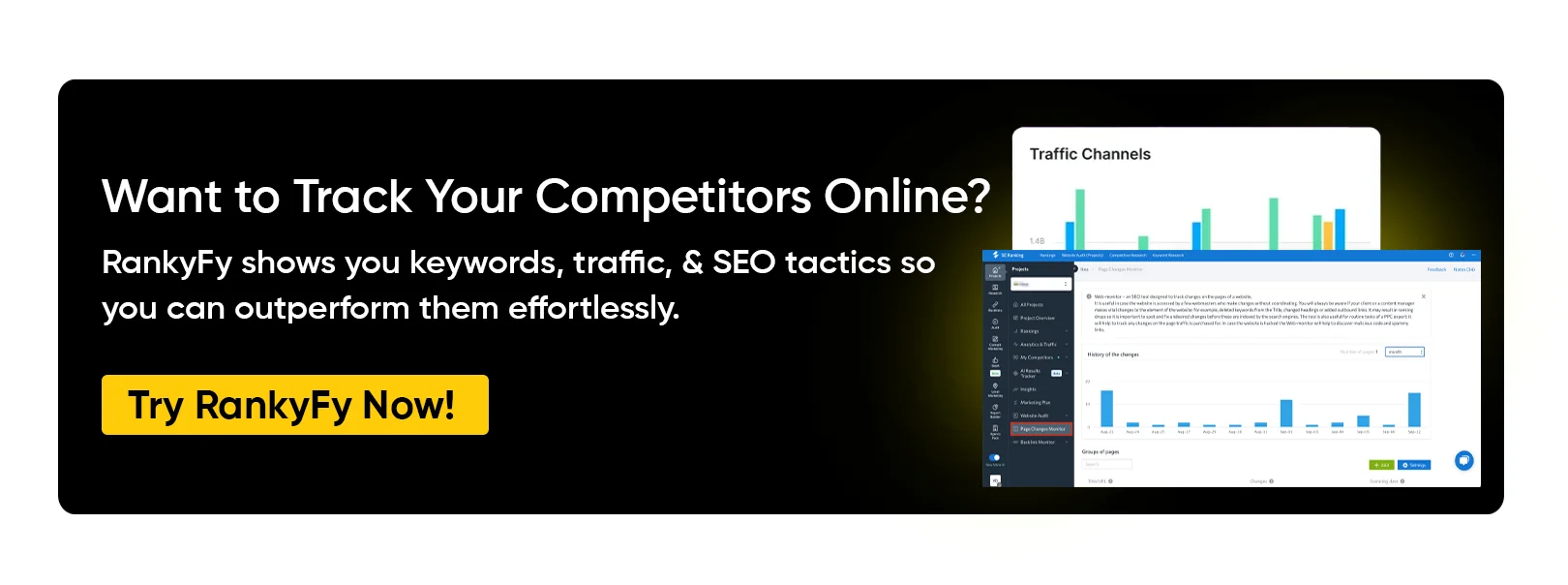
Manual research is helpful, but professional tools improve the accuracy of competitor discovery. Use tools to find your competitors. Smart tools like RankyFy’s competitor research tool help to understand your market competition.
It can be used for finding:
-
Competing domains
-
Organic competitors
-
Paid search competitors
-
Keyword overlap
-
Check Google Ads Competitors
If you run paid campaigns, your ad competitors are often your strongest commercial rivals.
How to check ad competitors:
-
Search your money keywords
-
Note recurring advertisers
-
Click through their landing pages
Advertisers investing consistently in ads perform well. They have:
-
Proven offers
-
Optimized funnels
-
High-converting pages
Their websites are critical competitor benchmarks.
-
Analyze Local SEO Competitors
For location-based businesses, local competitors differ from national brands.
How to Find Local SEO Competitors:
-
Search “service + city”
-
Analyze Google Map Pack results
-
Review Google Business Profiles
Websites ranking in local packs are your direct local competitors, even if you don’t know them offline.
-
Use Social Media and Marketplaces
Competitors don’t operate only on search engines. Brands active across platforms must be closely analyzed.
Explore:
-
LinkedIn company searches
-
Instagram hashtags
-
Facebook business pages
-
SaaS directories
-
Industry marketplaces
What to Analyze After Finding Competitor Websites
Discovery is only step one. Once you identify competitor websites, analyze them strategically.
Focus on:
-
Keyword targeting
-
Content depth
-
Page structure
-
User experience
-
Backlink quality
-
Conversion elements
It shows where competitors fall short, which helps brands to perform with better strategies.
How Competitor Research Improves SEO and Conversions
Competitor analysis helps a brand to discover how to convert the traffic more profitably.
- Keyword Clarity
It reveals high-intent keywords that help others attract organic traffic.
- Content Opportunities
It uncovers content gaps that can be optimized for better search results.
- Search Intent Alignment
It helps match your pages with real user intent based on how top competitors are working.
- On-Page Optimization
It improves structure and content as per the best performing SEO patterns.
- Authority Building
It helps to identify backlink sources that competitors use to strengthen authority.
- Traffic Efficiency
Reduces wasted effort by focusing on strategies already proven to drive organic traffic.
- Conversion Insights
Analyzing competitor CTAs and messaging helps to improve conversions.
- UX Improvements
Competitor analysis helps to fix engagement issues to increase retention as competitors.
How RankyFy Simplifies Competitor Website Research
RankyFy is built for businesses and agencies that want clear insights. With a simple interface, RankyFy’s SEO competitor analysis tool insights help businesses analyze their competitors and take actionable steps to improve performance.
With RankyFy, you can:
-
Instantly identify organic competitors
-
Discover missing keywords
-
Analyze competitor traffic patterns
-
Benchmark SEO and content performance
-
Spot ranking growth pattern
Instead of guessing, RankyFy shows exactly who you’re competing with and how to outrank them.
Conclusion
Finding your competitor’s website is simpler than you might assume. Moreover, it is a smart way to improve both your business’s SEO and conversions. With accurate competitors under your analysis, you can target the right keywords, create stronger content, and align your pages to perform better following the real user intent. With RankyFy, competitor insights become optimized and actionable. If you also wonder, “How to Find My Competitor's Website”, try RankyFy for instant results and in-depth analysis.
What to read next
9 Reasons Why an SEO Audit Is Important For Your Site’s Success
An SEO audit is a systematic review of a website's technical health, on-page elements, content...
Read More
How to Scrape Data from Google Maps: A Complete Guide
How to scrape data from Google Maps is a common question among modern sales teams,...
Read More
How to Audit Backlinks with the RankyFy Tool
Audit Backlinks with the RankyFy Tool to protect your website from search engine penalties and...
Read More
How to Find Competitors’ Backlinks with the RankyFy Tool
RankyFy Tool helps analyze competitors’ backlinks and uncover the link-building tactics supporting their search visibility....
Read More